Loading…

Loading…
Capabilities
One readout, used five ways. We weigh the mass on the working material in the liquid that matters, then turn that weight into the number your team decides on. Drive each study below and watch what it reads.
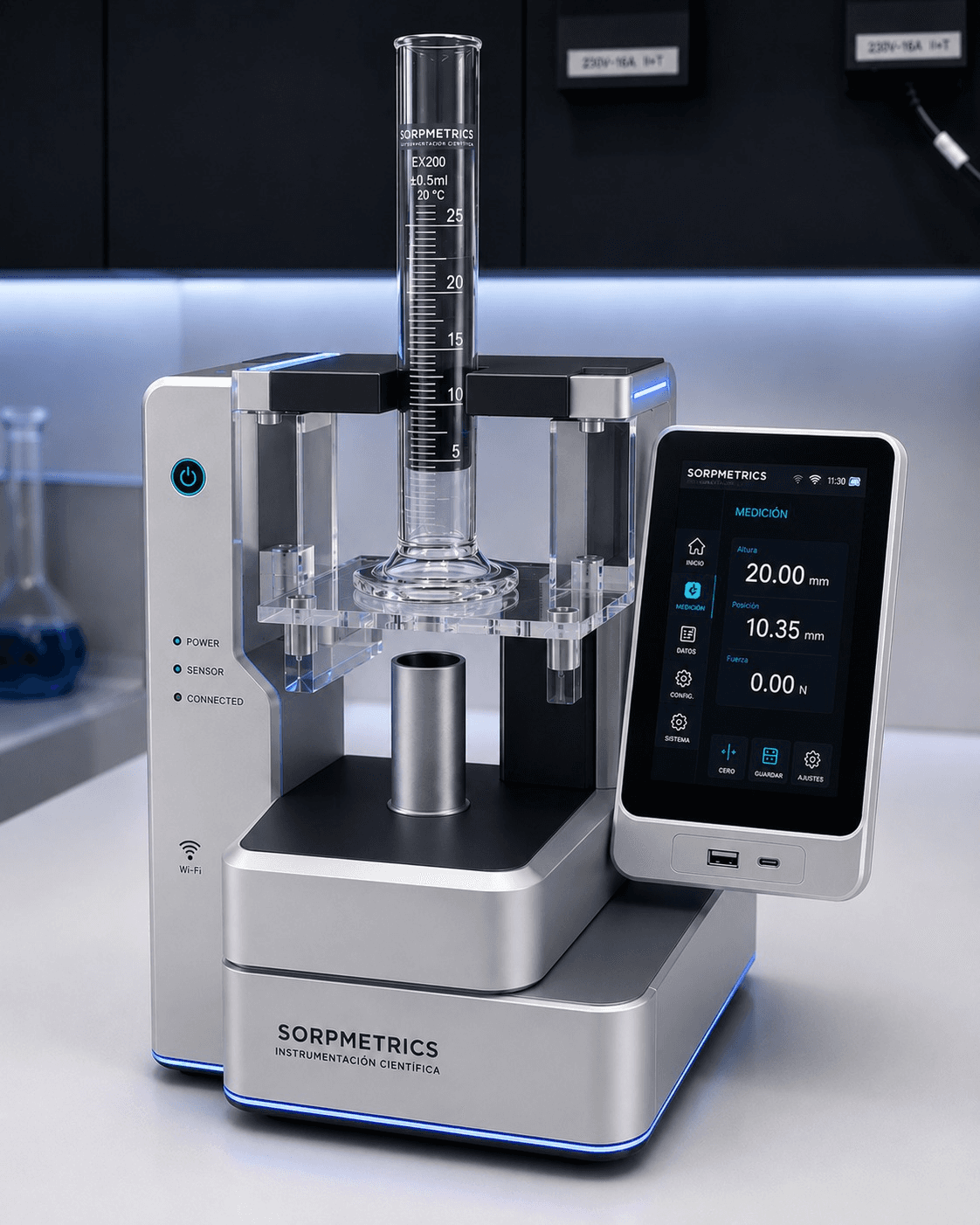
One readout, five studies
Each study is one way of reading the loading directly on the solid, in the working liquid. Pick one to watch its profile take shape, see the device it runs on and the minimum material to load — then add the studies you need and book them together. Every curve here is illustrative, not client data.
Illustrative — Capacity read: ≈ 18.6 wt% at the plateau
Equilibrium loading
≈ 18.6 wt% at the plateau
The loading read directly on the solid in your working liquid as it climbs to equilibrium — not inferred from the liquid by difference. One material, one analyte. Real numbers come from your samples after a feasibility check.
Your booking
Add the studies you want above — book one, or several together, in one trip.
One measurement, distinct studies
A single run reads the capacity at one condition. Isotherms walk a concentration ladder; release kinetics follow a time series; cycling repeats the load-and-release; mixture runs with an identity check show how a material loads when more than one species is in play. Each is its own study, bookable on its own. This is what the platform can measure, not a promise that one run hands you all of it.
What to send · mass
We need at least 15 mg on the PMC-1 or EMC-2, and at least 50 mg on the DC-10000 (working range 50–200 mg). That is the minimum material to load for an accurate read — a device spec, not an analyte limit of detection. Analyte-level LOD/LOQ is part of our ongoing metrology work and is not yet published, so we do not quote a detection-limit number.
What to send · a blank
Because we read the mass change of the solid, we build one calibration curve per material. Send a clean, non-adsorbed (blank) reference of each material alongside the samples to be tested — we draw the calibration line from the blank, then read any analyte off the same line.
The feasibility check confirms the sample plan with you before any run.
Where it fits
Your existing analytics tell you what is in the liquid. We tell you what is on the material. Run them together, let the identity check confirm the load, and neither answer stands alone.
Put it to work
Every engagement opens with a feasibility check. We confirm the fit and pin down the use case with you before any price is quoted.